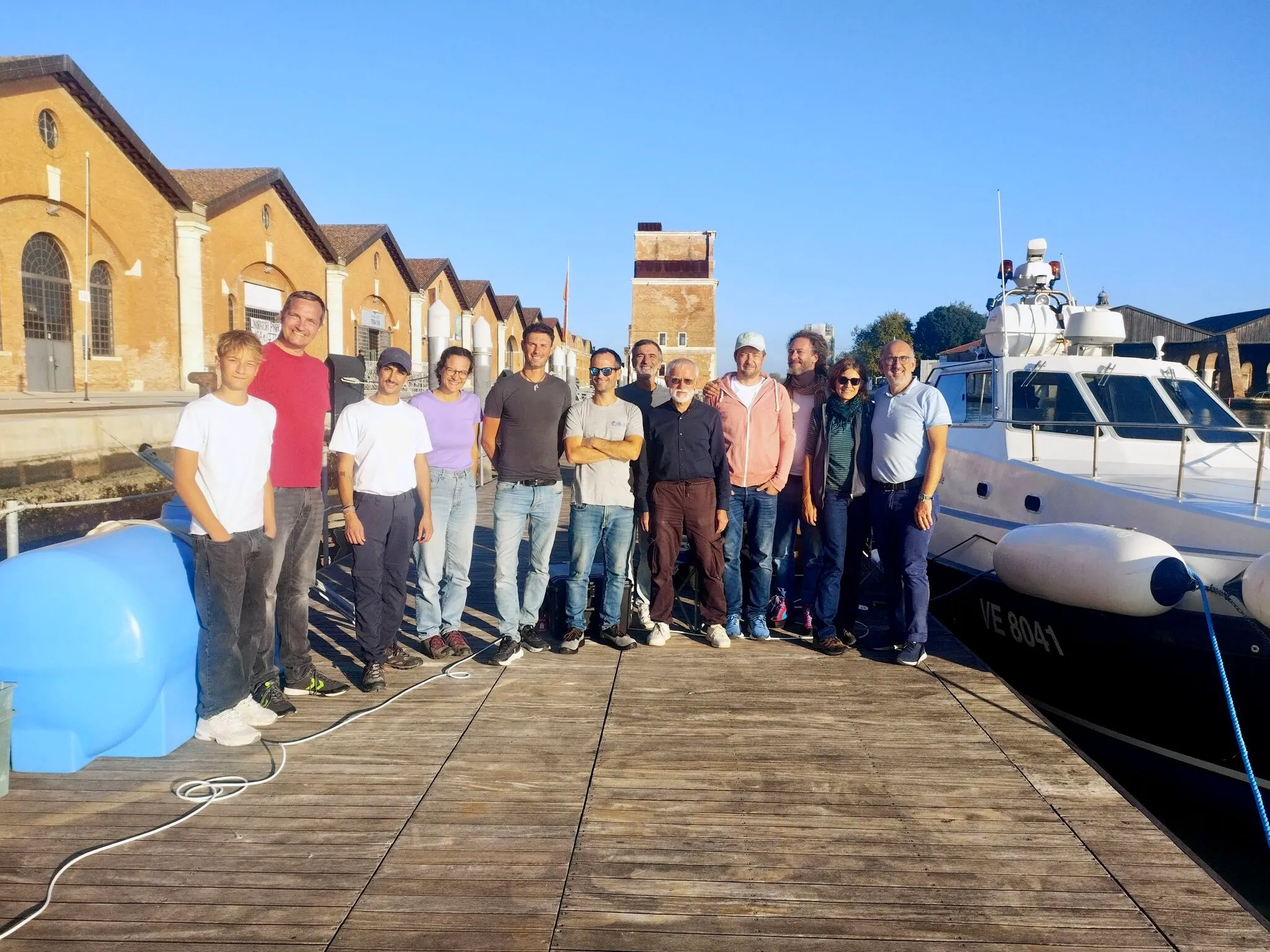
From 7 to 9 October 2025, we operated the LIFL-11, mFL-12, and mHR-2 together in the Venetian Lagoon. The work formed part of the European Space Agency’s PHY2FLEX campaign, with vessel support from Italy’s Consiglio Nazionale delle Ricerche.
The campaign provided the first opportunity to assess the three instruments as a suite under spray, vessel motion, and changing natural light. Each instrument completed the three-day programme and returned usable records.
On 8 October, the mHR-2 recorded above-water remote-sensing reflectance, or Rrs, while the active LIF instruments measured fluorescence in the same water. Acquiring those records at the same location and time creates the paired observations required for satellite cal/val. The Venice work also established an operating procedure for taking those measurements repeatedly during a survey day.