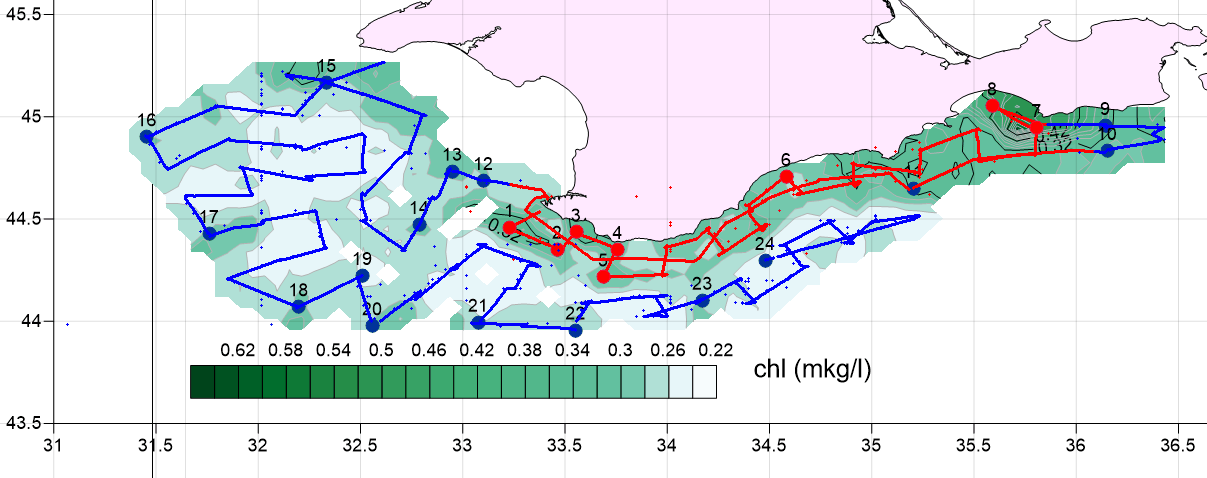
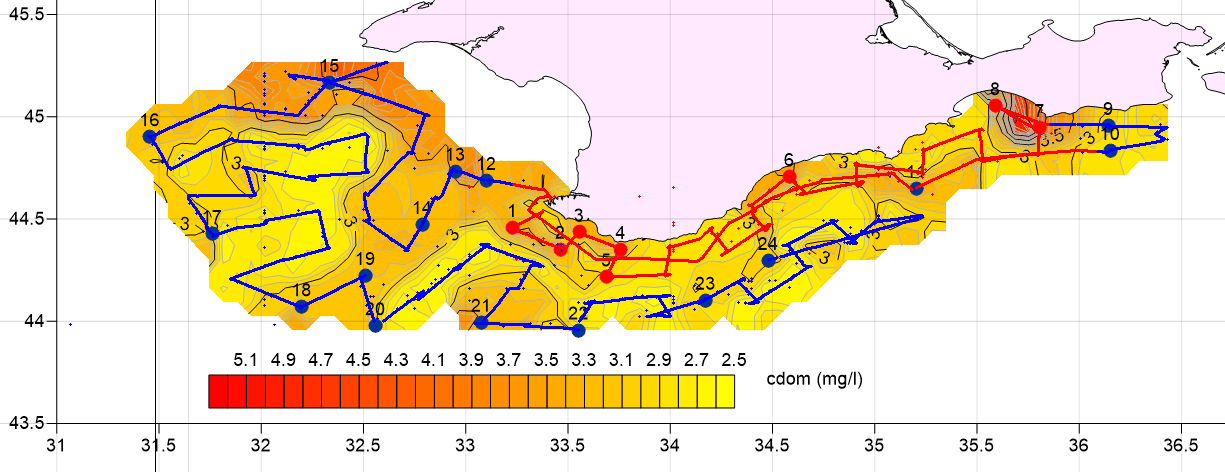
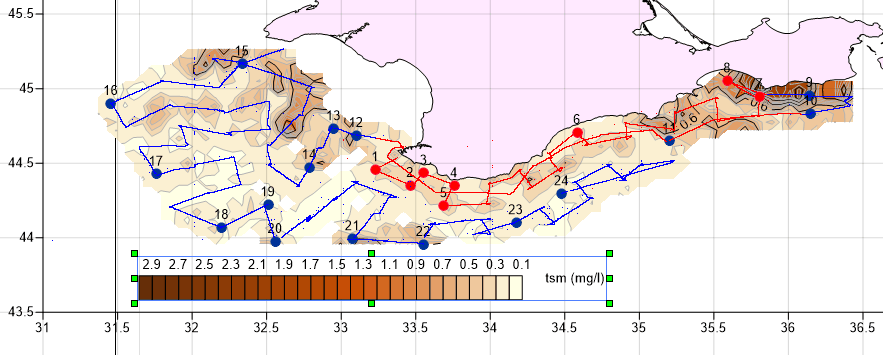
From 14 to 20 November 2017, a LIF lidar collected 75,872 returns across Sevastopol Bay and the adjacent Black Sea shelf. Chlorophyll-a, CDOM, and total suspended matter were measured together throughout the route.
Chlorophyll-a remained low, near 0.13 µg/L, while CDOM and suspended matter accounted for most of the spatial variation. Median CDOM was approximately 3.6 a.u., and suspended matter exceeded 15 mg/L at some nearshore locations.