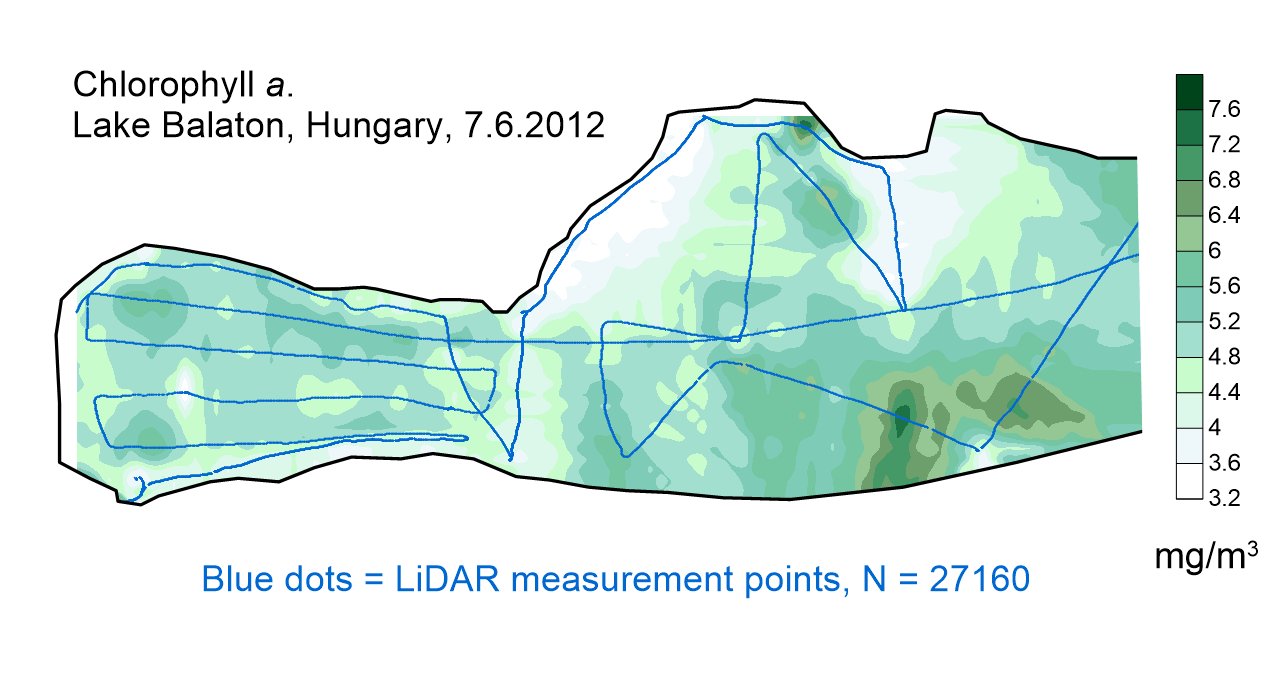
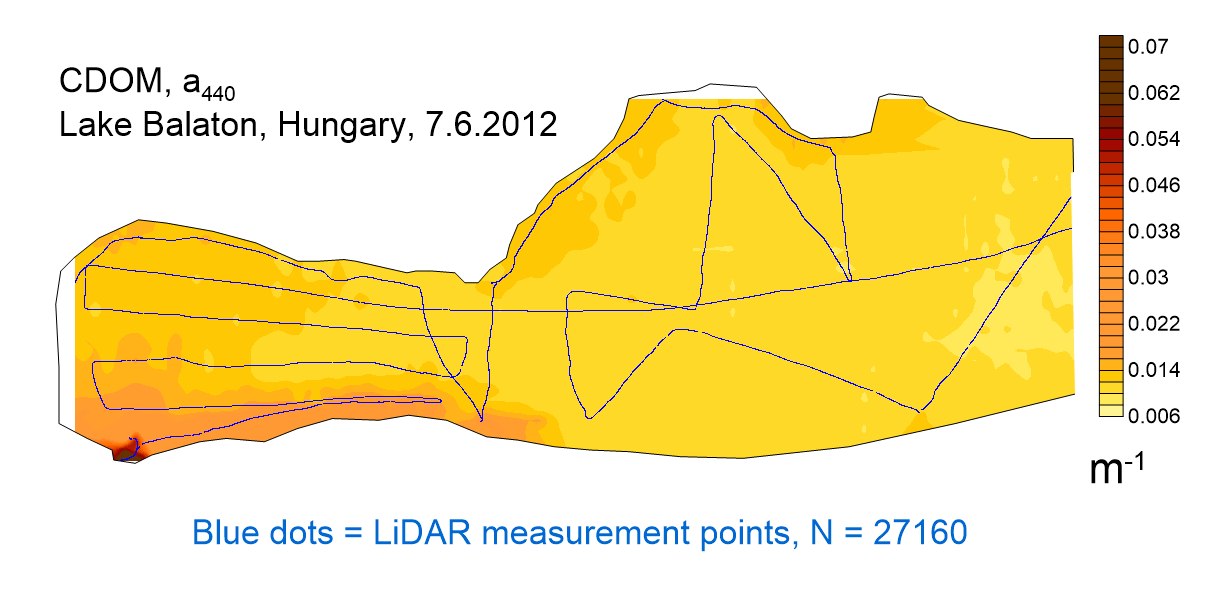
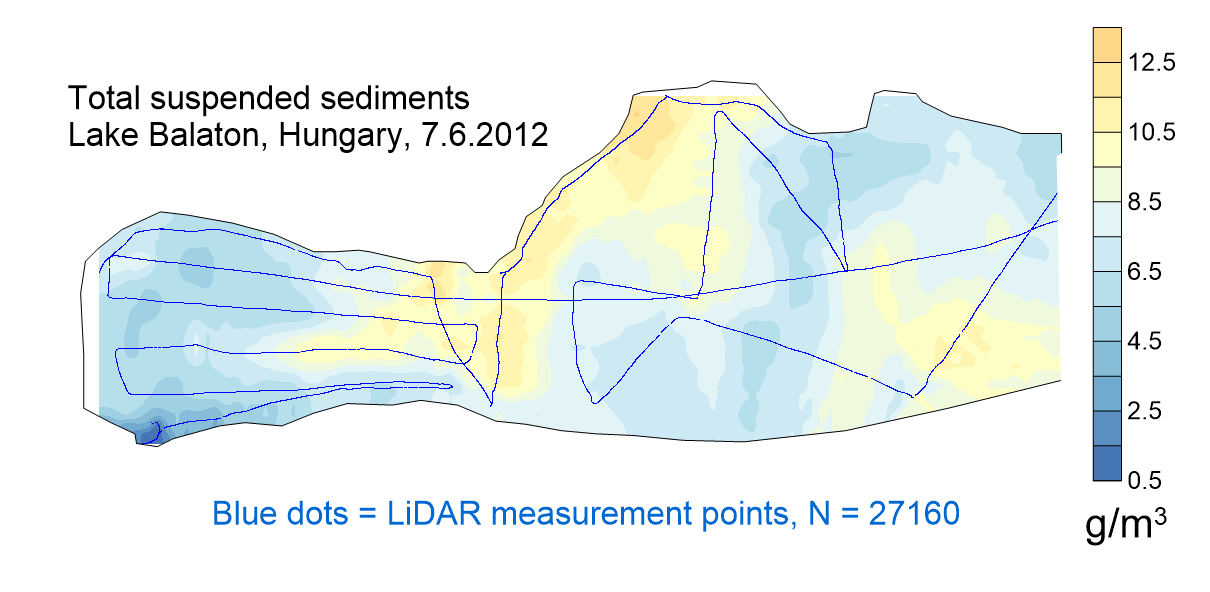
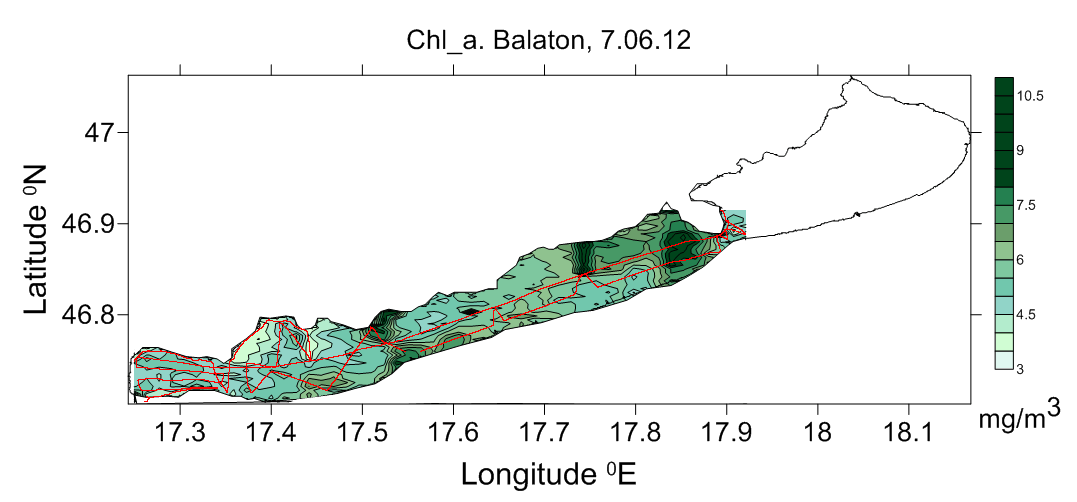
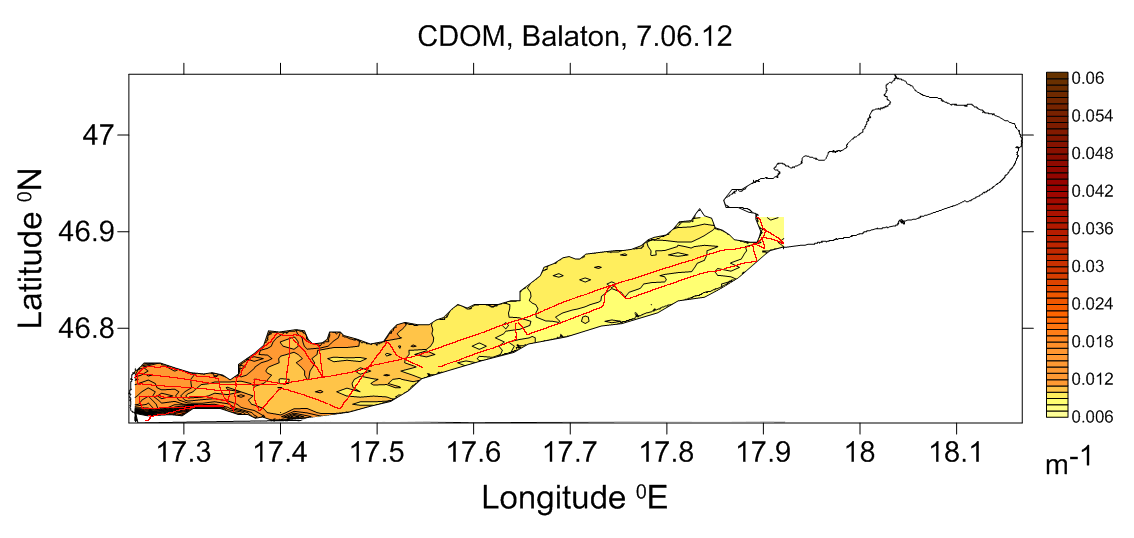
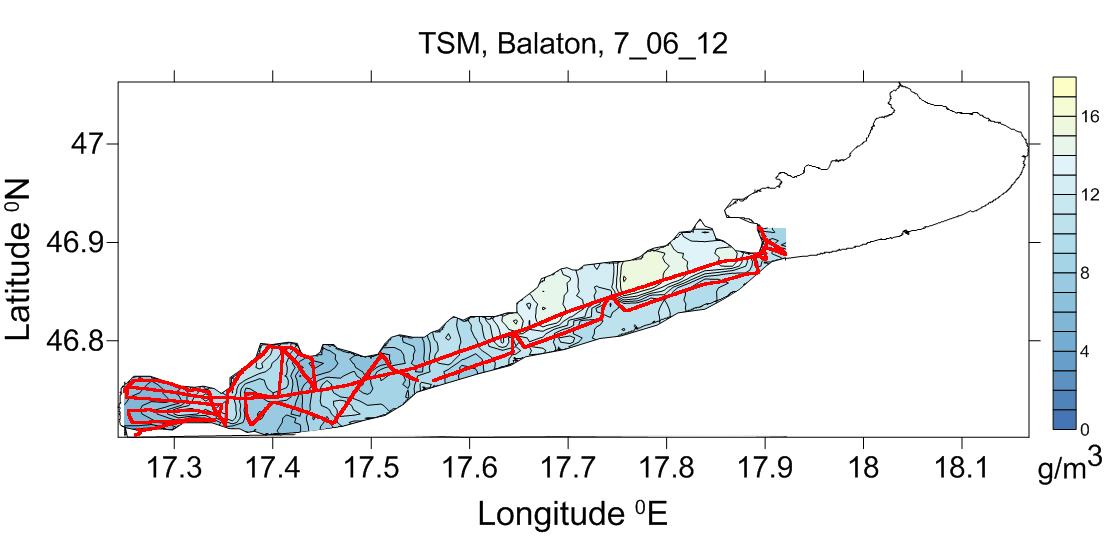
On 7 June 2012, a ship-mounted LIF lidar mapped Lake Balaton, one of Europe’s largest shallow lakes. The instrument recorded chlorophyll-a, total suspended matter, and CDOM together along the survey track.
Median chlorophyll-a was approximately 6.6 µg/L and median suspended matter was approximately 9.1 mg/L, with higher values in the shallower western basin. Work with the Balaton Limnological Research Institute compared the lidar measurements with conventional freshwater samples and was published in Remote Sensing in 2013.