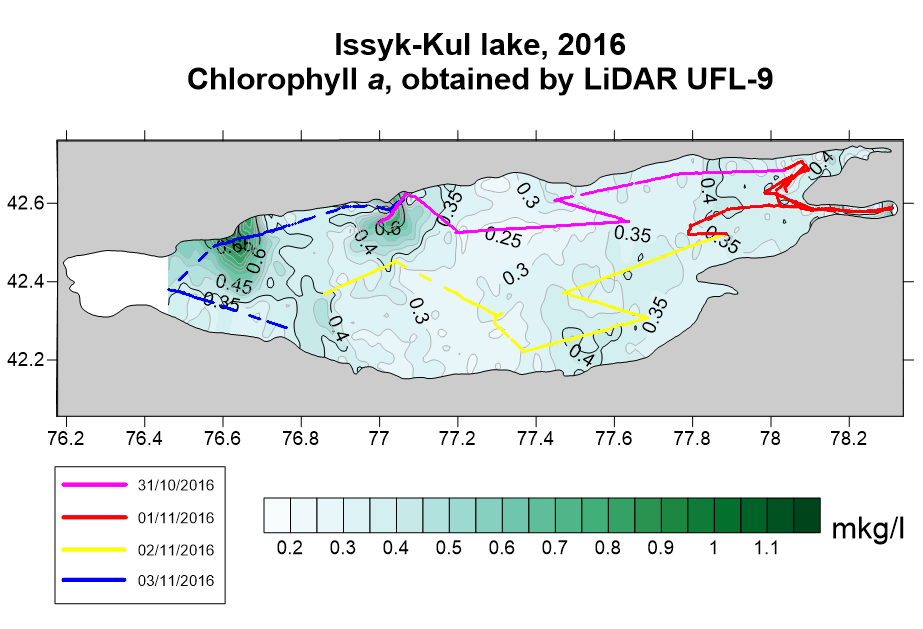
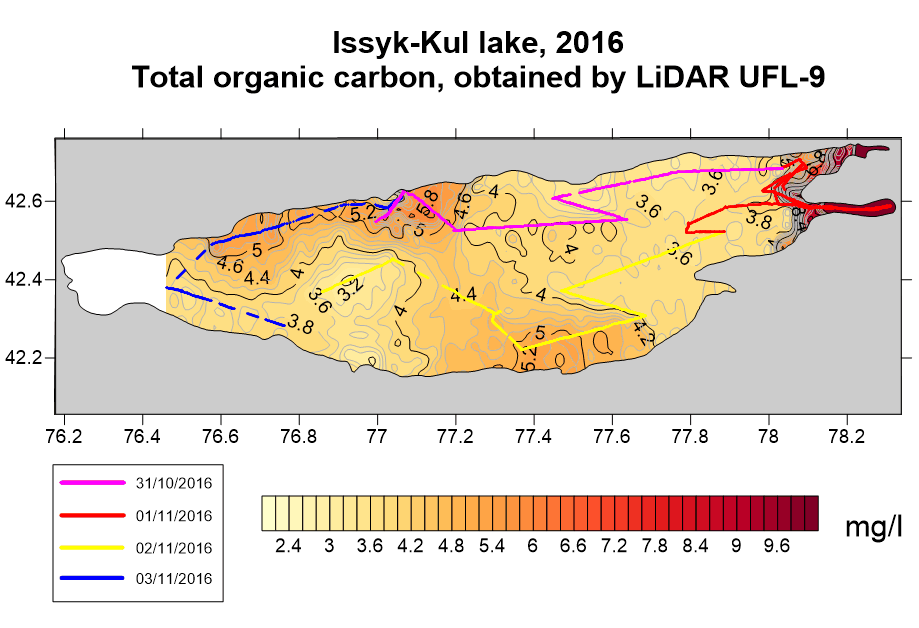
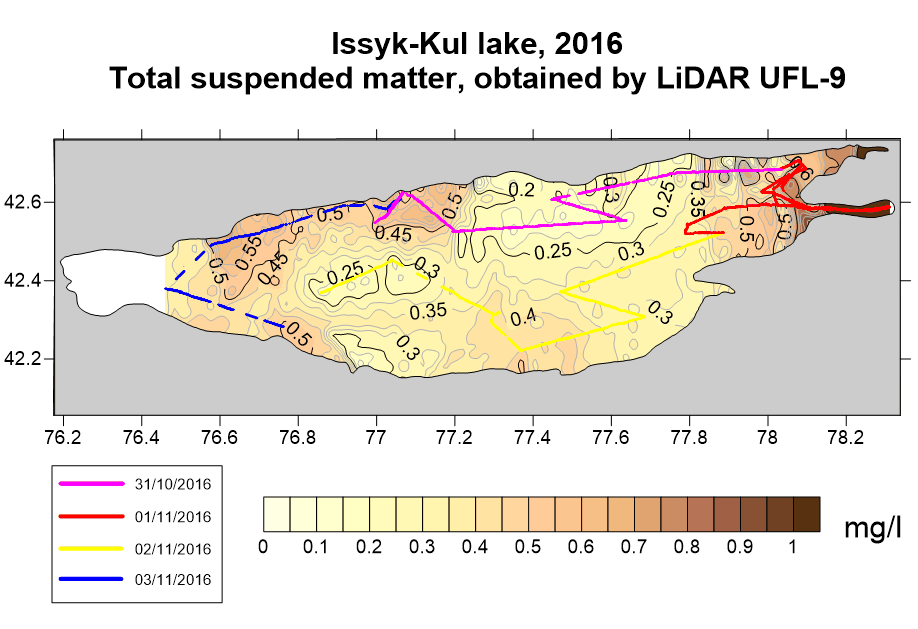
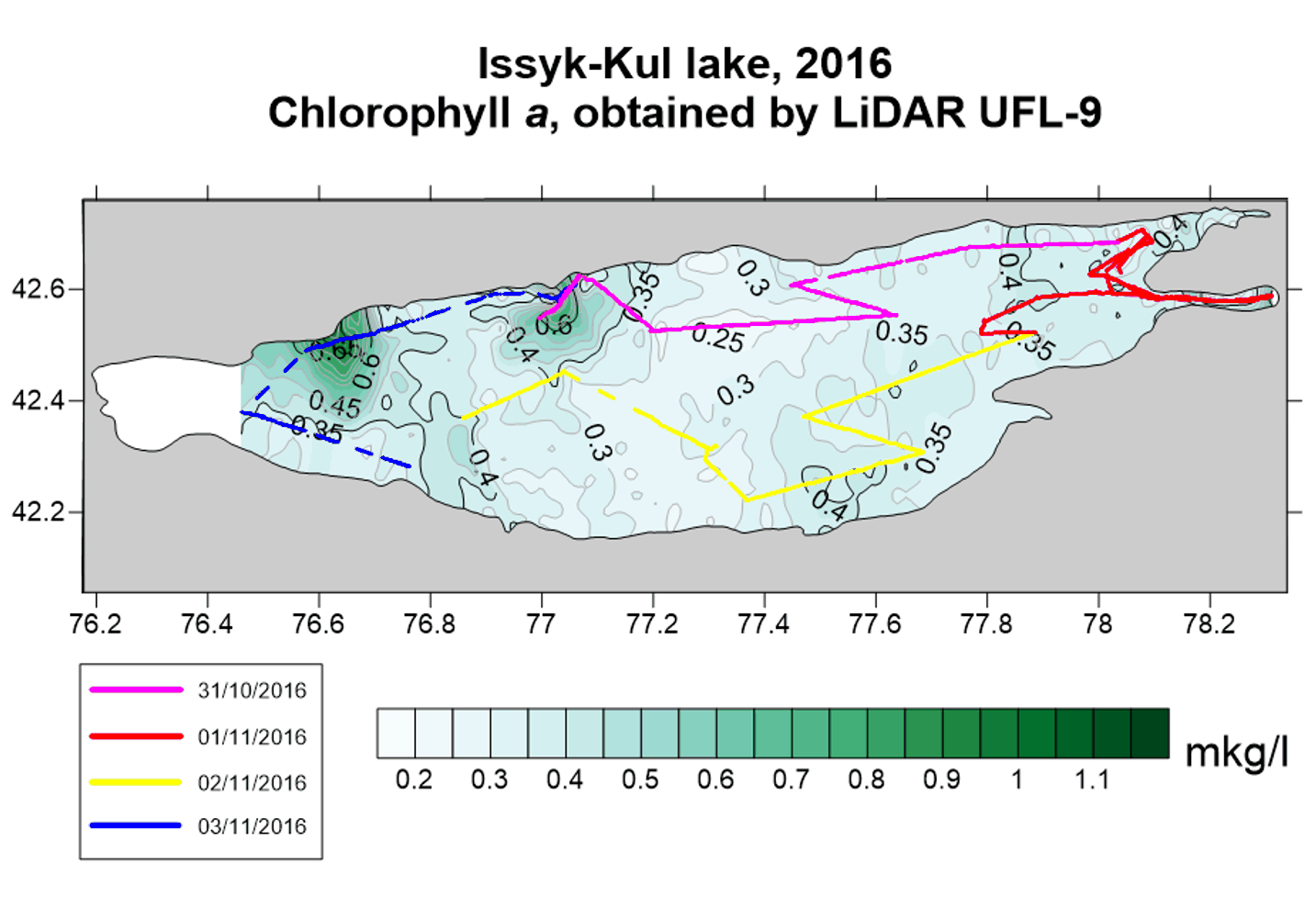
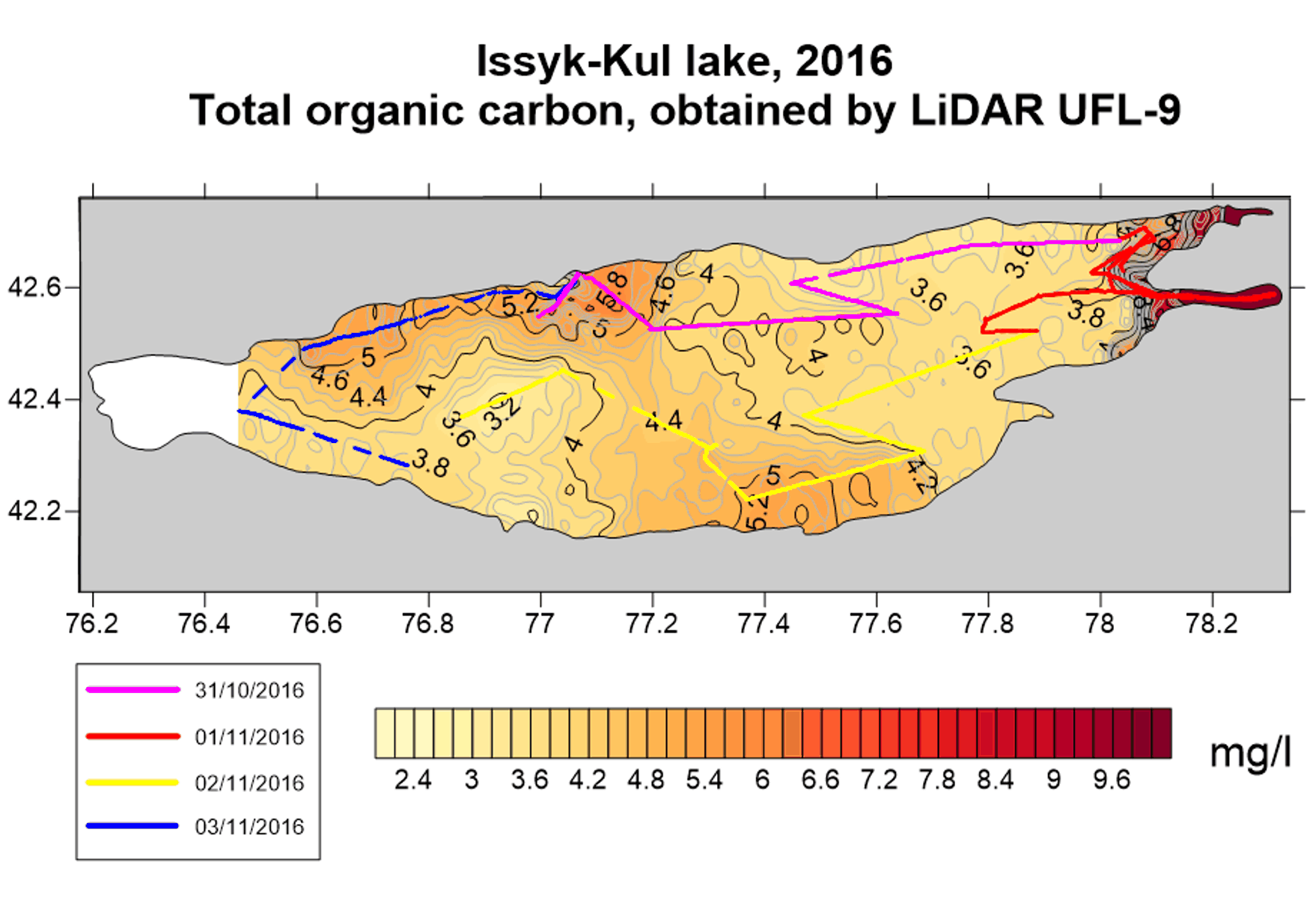
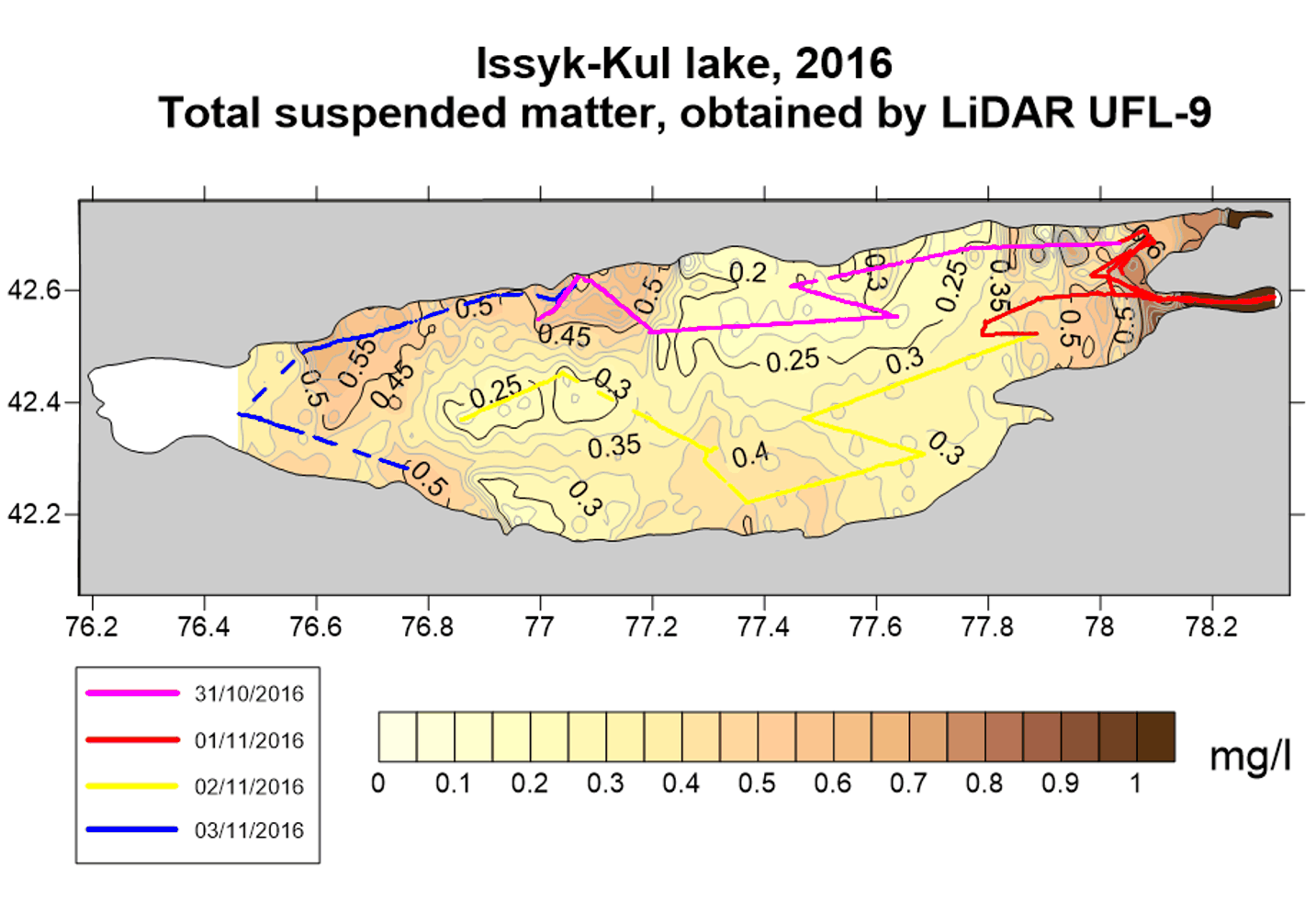
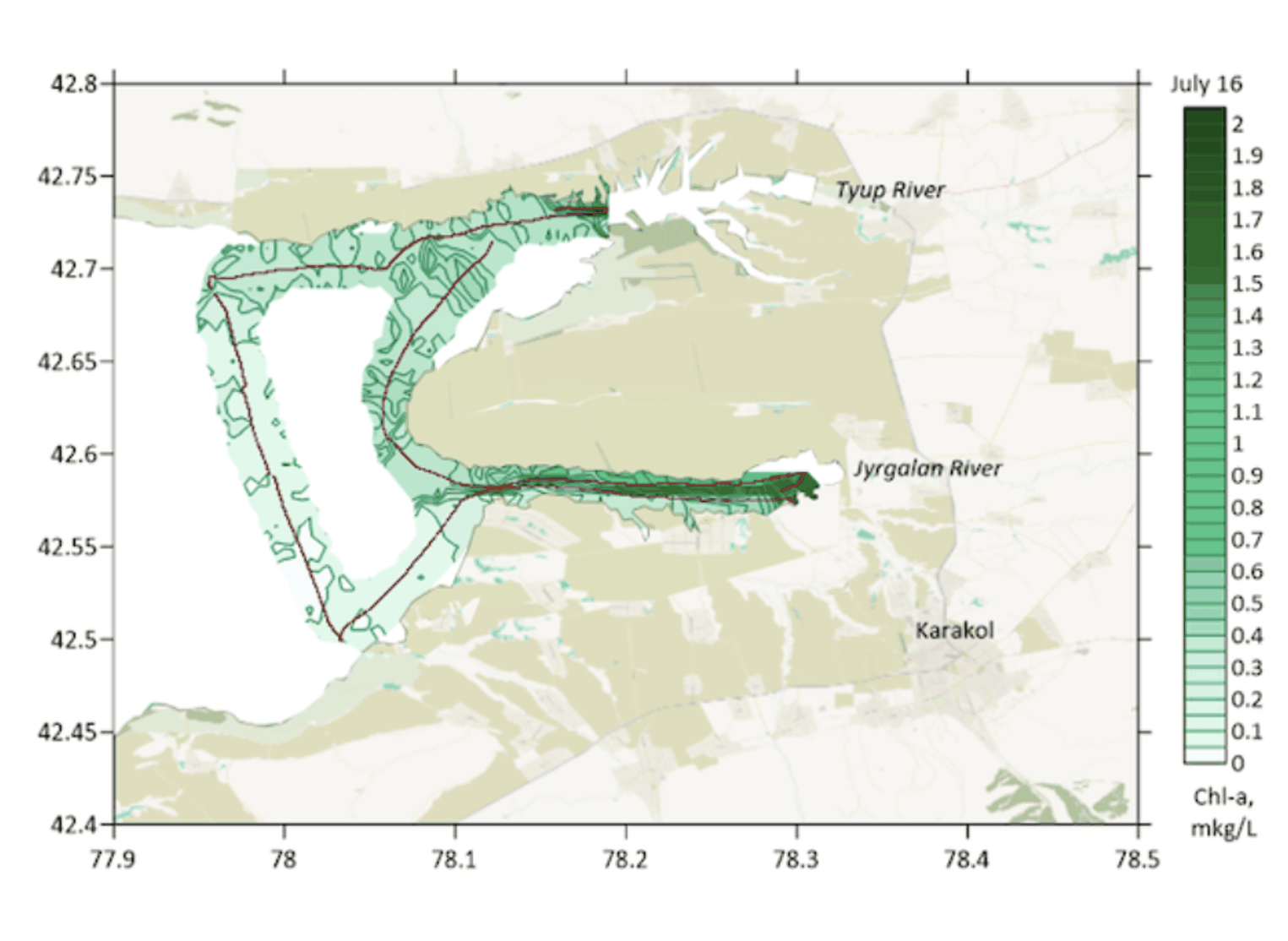
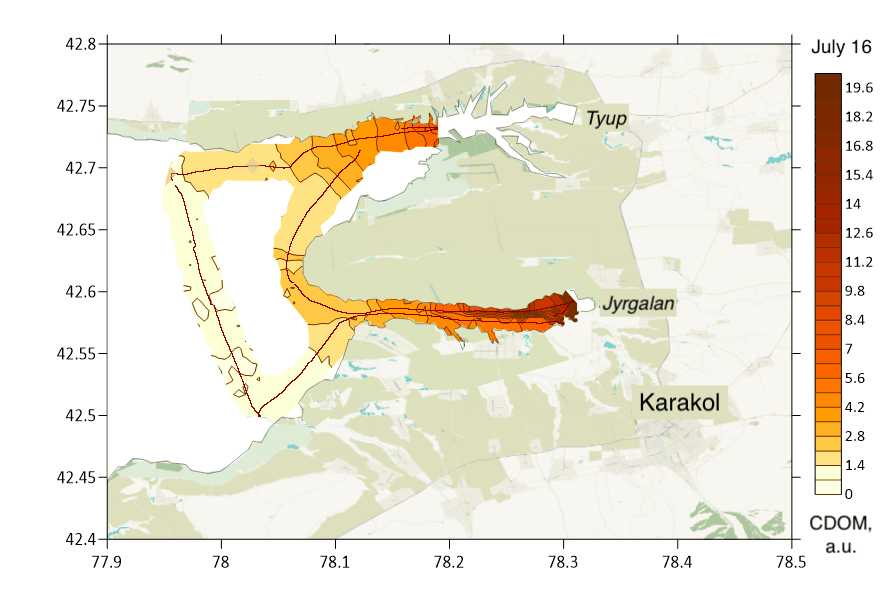
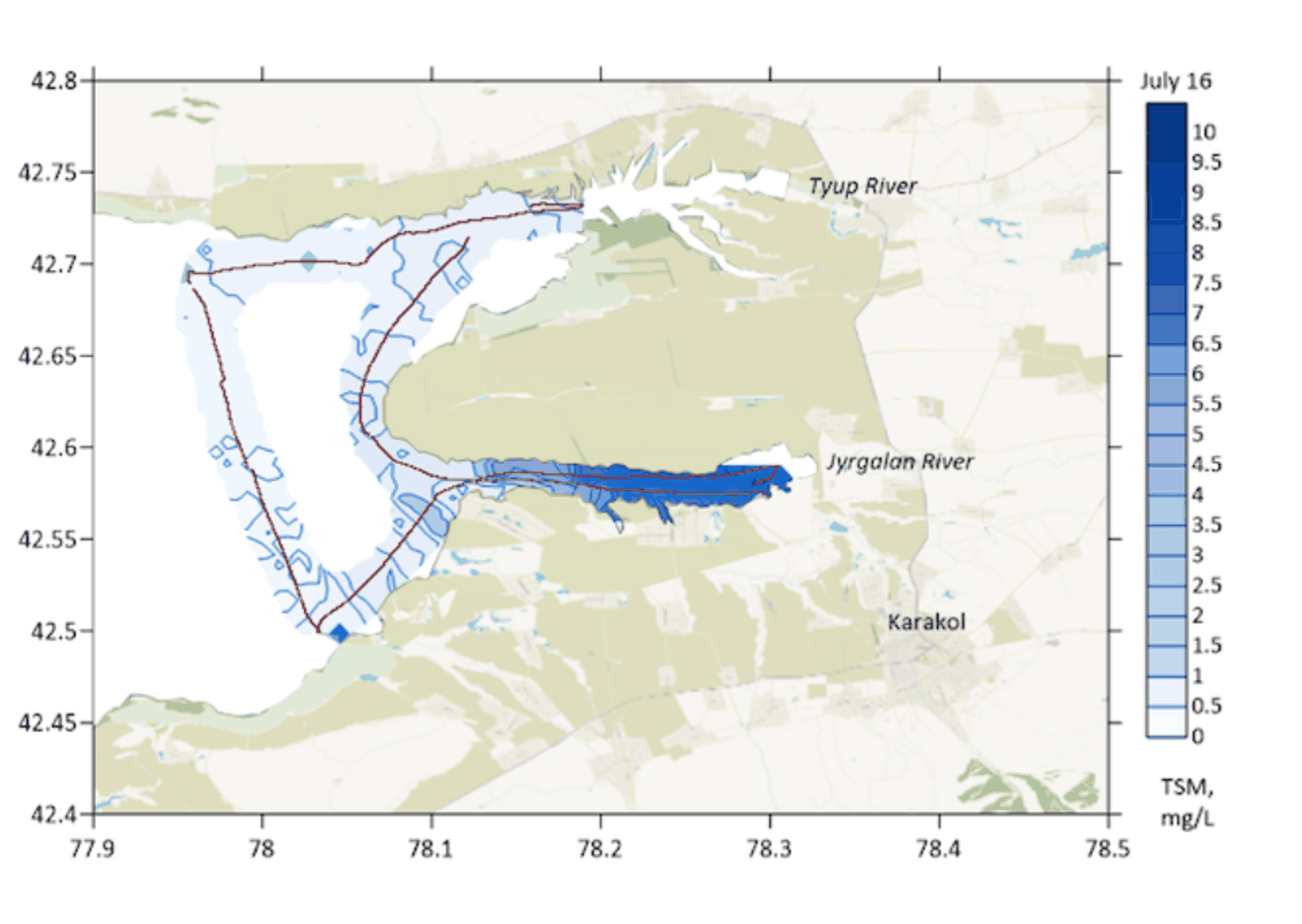
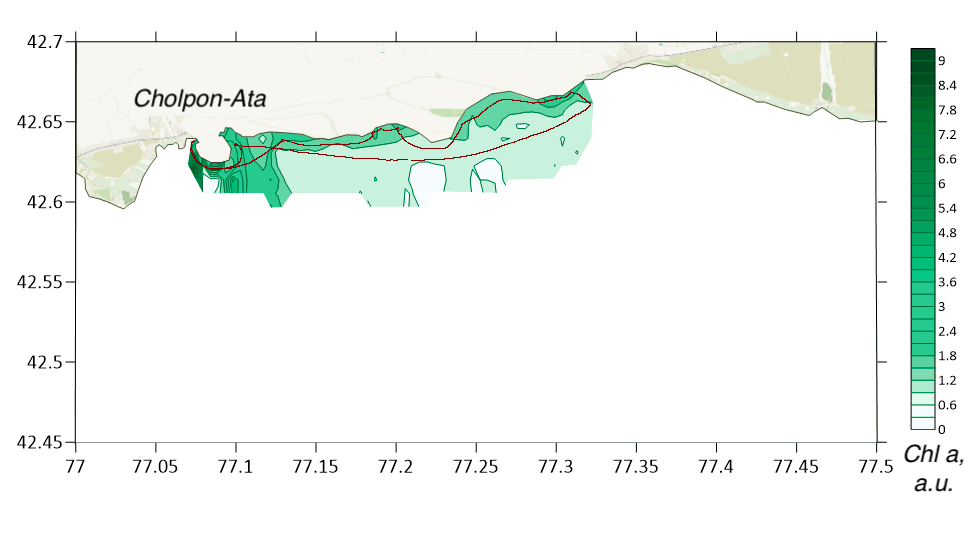
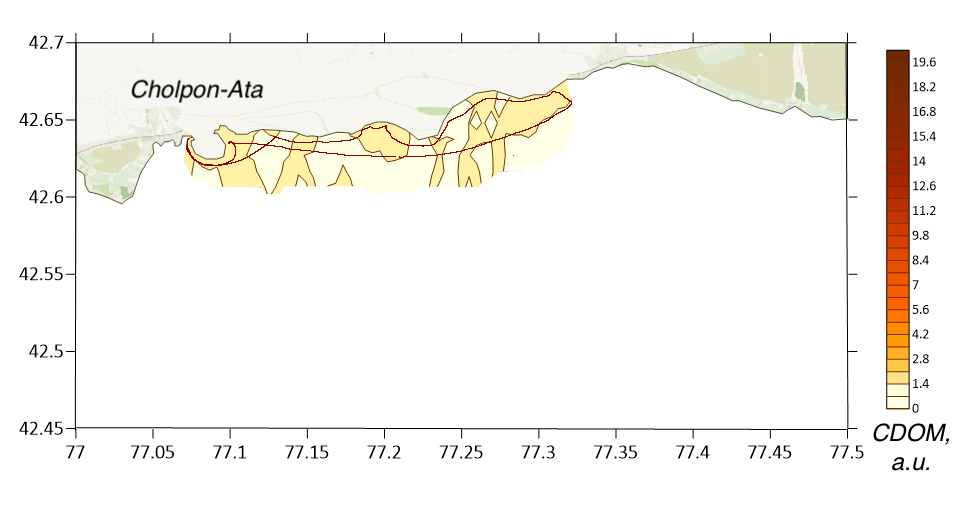
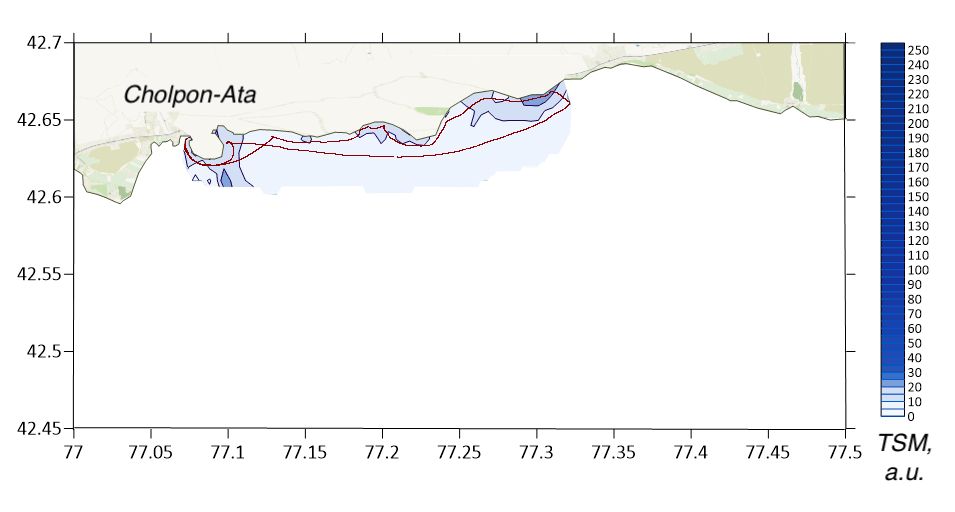
Fig. 13Campaign measurement record. 181,188 lidar returns are plotted along the vessel track
for Chl-a, CDOM, TSM. The field view applies
inverse-distance weighting to the same observations; the shoreline is from Natural Earth.
Issyk-Kul is a large, deep, oligotrophic lake in the Kyrgyz mountains. During a one-day survey, LIF lidar transects produced more than 4,000 chlorophyll-a observations and 1,000 measurements of suspended sediment in the upper water layer.
The survey was timed to a satellite overpass. Its in-situ record was used to develop preliminary regional bio-optical models and evaluate them against Sentinel-2A imagery. The results were published in Remote Sensing in 2023.